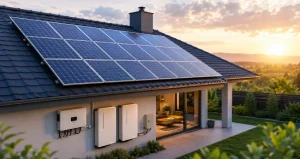
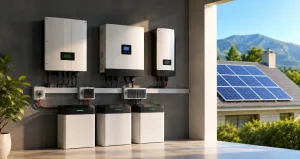
Choosing a lithium battery for a solar or backup power system in South Africa is no longer simply a matter of comparing kilowatt-hours. Freedom Won, Hubble, and BSLBATT all offer lithium battery solutions capable of supporting residential solar systems, but their strengths are noticeably different. The right choice depends on your inverter, required backup time, installation environment, future expansion plans, and the level of local support you expect.
South African homeowners should also look beyond the capacity printed on the battery. A battery that appears attractive on paper can become a poor long-term choice if its discharge capability restricts the inverter, communication is unreliable, or warranty assistance is difficult to obtain. From a system-design perspective, usable energy, discharge power, battery management system communication, installation conditions, and support infrastructure matter just as much as purchase price.
This Freedom Won vs. Hubble vs. BSLBATT comparison examines those practical differences. Rather than selecting a universal winner, the goal is to identify which battery makes the most sense for different types of South African homes and solar installations.
Freedom Won, Hubble and BSLBATT at a Glance
Freedom Won has a particularly strong position in the South African energy-storage market and offers batteries ranging from residential systems to considerably larger commercial solutions. Hubble is another familiar name among South African solar installers, with products such as the AM-5 designed around modular residential storage. BSLBATT takes a broader international approach, offering numerous LiFePO4 configurations including wall-mounted and rack-mounted batteries.
| Feature | Freedom Won | Hubble | BSLBATT |
|---|---|---|---|
| Common chemistry | LiFePO4 on current relevant ranges | LiFePO4 | LiFePO4 |
| Residential options | Multiple capacities | Modular residential batteries | Multiple wall and rack options |
| South African presence | Very strong | Very strong | More distributor dependent |
| Expansion potential | Strong | Strong | Very strong on selected models |
| Best suited to | Premium locally supported systems | Practical residential installations | Flexible and scalable configurations |
Freedom Won: Strong Local Ecosystem and High-Power Options
Freedom Won’s biggest advantage for a South African buyer is that its products are closely connected to the local solar market. Its LiTE Home and Business 52V range includes multiple capacities, allowing a system designer to choose a battery according to both required energy and inverter size. The company also offers high-voltage products for larger installations.
For example, the Freedom Won LiTE Home 10/8 has 10kWh total capacity, with 8kWh specified at 80% depth of discharge. It provides 10kW continuous discharge power and is recommended for inverter capacity up to 10kVA. Larger models increase both storage and available power. Freedom Won specifies a standard warranty of 10 years or 6,000 cycles for this model under defined operating conditions.
This relationship between battery capacity and power is important. A household with an electric kettle, microwave, pumps and several other loads operating simultaneously may need substantial instantaneous power even when total daily energy consumption is moderate. Freedom Won’s larger integrated battery options can therefore be attractive where high discharge capability matters.
Hubble: A Practical Choice for Typical South African Homes
Hubble’s AM-5 represents a different approach. Instead of beginning with a large integrated battery, homeowners can use modular 5.12kWh units and increase capacity as their requirements grow. The AM-5 operates at 51.2V, has a rated capacity of 100Ah and supports 100A continuous charging and discharging, equivalent to a 1C rating. Published Hubble material also specifies CAN communication and modular parallel operation.
That makes the AM-5 particularly relevant to common 5kW-class residential systems. Its specifications list LiFePO4 chemistry and a design life of approximately 15 years, while Hubble has promoted a 10-year warranty for the AM-5 subject to its applicable terms and conditions.
The practical attraction is straightforward: a homeowner can start with one battery where consumption is modest and design the system for additional storage later. For many South African households, that can be more financially manageable than purchasing a large battery bank immediately.
BSLBATT: Flexible Configurations and Broad Scalability
BSLBATT becomes interesting when flexibility is a priority. The company offers several 51.2V LiFePO4 products rather than forcing buyers into one residential format. Its B-LFP48-100E, for example, provides 5.12kWh from a 100Ah module and supports 100A continuous discharge. BSLBATT specifies more than 6,000 cycles at 95% depth of discharge under stated conditions and a 10-year manufacturer warranty.
The company’s Li-PRO 5120 provides another 5.12kWh configuration but adds an IP65 enclosure, WiFi and Bluetooth monitoring and compatibility with numerous inverter brands. This can be useful when installation location or remote monitoring is important.
Where BSLBATT requires more careful evaluation in South Africa is after-sales support. Manufacturer specifications can be impressive, but homeowners should establish who will process a warranty claim locally, whether replacement stock is available and whether their installer has experience configuring the chosen BSLBATT model.
Usable Capacity Matters More Than the Number on the Box
A common mistake is comparing batteries purely according to nominal kWh. Nominal capacity tells you how much energy the battery contains theoretically. Depth-of-discharge limits and manufacturer operating recommendations determine how much of that capacity should routinely be used.
Freedom Won illustrates this clearly by publishing both total and depth-of-discharge figures. Its LiTE Home 20/16 has 20kWh total capacity, 16kWh at 80% depth of discharge and 18kWh at 90%. When comparing quotations, homeowners should therefore ask installers for usable energy under the warranty conditions rather than comparing only headline capacity.
Discharge Power Can Be More Important Than Capacity
From practical system-design experience, this is one of the specifications buyers most frequently overlook. A large battery does not automatically mean it can supply a large load continuously.
Imagine that your inverter can provide 8kW but the connected battery bank has a substantially lower continuous discharge limit. The battery may become the system bottleneck. Before purchasing, compare inverter output with the battery’s continuous discharge current and power. This becomes especially important in homes running pumps, kitchen appliances, air conditioning or other relatively demanding loads.
Inverter Compatibility Should Be Confirmed Before Purchase
Modern lithium batteries contain a battery management system, or BMS, that protects cells and communicates information such as state of charge and operating limits to compatible equipment. Communication commonly takes place through CAN or RS485.
Never assume that two products are fully compatible simply because both operate in the 48V or 51.2V category. Confirm the exact battery model, inverter model, supported communication protocol and required firmware with the installer or manufacturer. Freedom Won itself advises customers to ensure battery voltage suits the selected inverter, particularly with high-voltage systems.
Warranty and Local Support
A ten-year warranty looks excellent on a specification sheet, but the process behind that warranty matters. Ask who handles diagnosis, whether the installer remains responsible for initial troubleshooting, what operating conditions must be maintained and whether labour or transport costs are covered.
This is where Freedom Won and Hubble have a natural advantage for many South African buyers because of their established presence in the domestic solar ecosystem. BSLBATT can still be a strong option, particularly when supplied by an experienced local distributor, but distributor quality should become part of the purchasing decision rather than an afterthought.
Which Battery Offers the Best Value?
There is no single winner for every installation. Freedom Won is particularly compelling when local support, substantial power capability and larger integrated storage options are priorities. Hubble is attractive for mainstream residential systems where modular expansion and familiarity among local installers are valuable. BSLBATT deserves consideration where configuration flexibility, monitoring features or extensive modular expansion are important.
The more useful calculation is total system value: usable kWh, continuous power, expected cycling, warranty conditions, inverter compatibility, installation cost and local service. A battery that costs slightly more but integrates correctly with the rest of the system can deliver better long-term value than a cheaper unit requiring compromises.
How to Choose the Right Battery for Your South African Home?
Start by measuring actual electricity consumption rather than choosing a battery according to house size. Identify essential loads, calculate their combined wattage and estimate how many hours they need to operate from stored energy. Then consider whether solar panels will recharge the battery during the day.
For example, a household averaging 500W of essential load for six hours needs roughly 3kWh before conversion losses and reserve capacity are considered. A household regularly consuming 1.5kW during the same period needs substantially more storage. This simple calculation immediately produces a more useful battery requirement than choosing a popular capacity without examining consumption.
Finally, leave room for expansion. Electricity requirements often increase after solar installation because homeowners begin shifting more appliances onto their solar system. Designing the inverter, cabling, protection equipment and battery arrangement with future expansion in mind can reduce expensive alterations later.
Frequently Asked Questions
1. Is Freedom Won better than Hubble?
Neither is automatically better. Freedom Won is particularly attractive for buyers wanting larger integrated storage, substantial discharge capability and a strong South African ecosystem. Hubble can make more sense for a homeowner who prefers modular residential batteries and wants to increase capacity gradually.
2. Is BSLBATT suitable for South African solar systems?
Yes, provided the specific model is compatible with the inverter and reliable local support is available. BSLBATT offers LiFePO4 batteries with CAN and RS485 communication and supports numerous inverter brands on selected products. Local distributor capability should still be verified before purchase.
3. How much battery capacity does a South African home need?
It depends on energy consumption and required backup duration. Small essential-load systems may operate effectively with around 5kWh, while homes requiring longer overnight operation or powering more appliances may require 10kWh, 15kWh or considerably more. Actual consumption data provides the best basis for sizing.
4. Is a 5kWh battery enough for a 5kW inverter?
It can be, but capacity and power are different measurements. The battery must also support enough continuous discharge current for the loads being supplied. Check the battery’s discharge specification instead of assuming that a 5kWh battery automatically provides 5kW continuously.
5. How long should a LiFePO4 solar battery last?
Quality LiFePO4 batteries are commonly designed for thousands of cycles. Freedom Won specifies 6,000-cycle warranty conditions on relevant LiTE models, while Hubble documentation lists 6,000 cycles for the AM-5 under specified conditions. Actual longevity depends heavily on temperature, depth of discharge, charging behaviour and operating conditions.
6. Can I add another battery later?
Often yes, but expansion rules vary by manufacturer and model. Battery age, firmware, communication configuration and allowable parallel quantities should be checked before mixing units. Planning expansion during the original installation is safer than assuming any additional battery can simply be connected later.
7. Does battery brand need to match the inverter brand?
No. Many batteries communicate with several inverter brands. What matters is official compatibility between the exact models and correct BMS configuration. Ask the installer to confirm supported CAN or RS485 communication rather than relying solely on voltage compatibility.
8. Should I choose a battery based on warranty length?
Warranty length is important but should not be considered alone. Read the operating conditions, cycle limitations, depth-of-discharge requirements and claim procedure. Also determine who provides local technical support because a long warranty has limited practical value if obtaining service is difficult.
9. What is the most important battery specification?
There is no single specification. Usable capacity determines runtime, continuous discharge capability determines how much load the battery can support, while cycle life and warranty influence long-term ownership. Inverter communication and local technical support are equally important in a complete solar installation.
10. Which battery would I choose for a new South African solar installation?
For a premium installation where strong local support and higher-capacity options are priorities, Freedom Won would be high on the shortlist. For a typical residential 5kW-class system requiring straightforward modular expansion, Hubble deserves serious consideration. BSLBATT becomes particularly interesting when broad scalability, alternative form factors or monitoring features fit the project better. The final decision should always be based on the complete system rather than brand reputation alone.
Conclusion
Freedom Won, Hubble and BSLBATT can all form the foundation of a capable lithium energy-storage system, but they solve the purchasing decision differently. Freedom Won stands out for its South African ecosystem and powerful integrated options, Hubble offers a practical modular route for many residential installations, while BSLBATT provides impressive configuration and expansion flexibility.
For South African homeowners, the smartest investment is therefore not necessarily the battery with the lowest price or largest advertised capacity. Compare usable energy, continuous discharge capability, inverter compatibility, warranty conditions, expansion options and local after-sales support. A correctly sized battery matched to the rest of the solar system is far more valuable over its lifetime than choosing a brand on specifications alone.