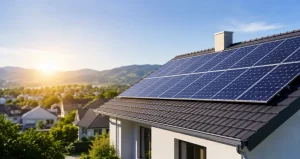
Installing solar power can be one of the most practical upgrades for a South African home, but the upfront price remains a major obstacle for many households. A complete system may include photovoltaic panels, an inverter, batteries, electrical work, mounting equipment and installation. Paying the entire amount in cash is therefore not realistic for every homeowner.
This is where solar finance becomes useful. Instead of saving until you can purchase the entire system outright, you may be able to finance the installation and repay the cost monthly. Depending on your circumstances, this can be done through dedicated solar finance, asset finance, a home loan facility or other forms of credit. Some arrangements can cover the full approved cost, meaning you may not need a large upfront cash payment.
However, “no money down” should never be confused with “free solar.” You are still borrowing money and will generally repay the financed amount with interest and applicable fees. The important question is whether the financing structure, system size and expected electricity savings make sense for your household over the long term.
What Is a Solar Loan?
A solar loan is financing used to purchase and install a solar energy system. Depending on the lender and product, the finance may cover solar panels, batteries, an inverter and related installation expenses. You then repay the financed amount over an agreed period, usually through monthly instalments.
South Africans do not necessarily need a product literally called a “solar loan.” Banks and finance providers offer several ways of funding renewable energy installations. For example, solar may sometimes be financed through a home loan, further advance, readvance, personal finance or standalone asset finance.
What Does No Money Down Solar Financing Actually Mean?
No money down generally means an approved finance arrangement covers the eligible upfront purchase and installation cost rather than requiring you to pay a substantial deposit from your savings. Whether this is available depends on the lender, applicant, property and type of finance.
This distinction matters. Some offers may finance 100% of an approved installation, while others require a contribution or only finance particular equipment. Additional expenses such as administration charges, insurance, electrical upgrades or registration costs may also fall outside the advertised system price.
Before accepting an offer, ask the provider for a written breakdown showing the financed amount, interest rate, fees, repayment term, monthly instalment and total amount repayable.
How Solar Financing Works in South Africa?
The process normally starts with an assessment of your household’s electricity requirements. A reputable installer should examine consumption patterns rather than simply recommending the largest package available. Your roof, available sunlight, daytime electricity consumption, backup requirements and major appliances all influence the appropriate system size.
Once you receive a detailed quotation, you can submit it as part of a finance application. The lender will generally assess affordability and creditworthiness before deciding whether to approve the application and on what terms.
Some financing programmes also require an approved or accredited installer. This can be beneficial because the quality of installation matters just as much as the equipment. A poorly designed system can leave a homeowner paying for capacity that is rarely used or struggling with inadequate backup.
Main Ways to Finance Solar With Little or No Upfront Cash
1. Dedicated Solar or Energy Finance
Some South African lenders have financing specifically structured around renewable energy installations. These products can be easier to evaluate because the funding is intended for solar and related energy equipment.
For example, Absa currently describes Solar and Energy Finance for qualifying existing home-loan customers through a Further Advance or ReAdvance. Its published information states financing can reach R300,000, subject to qualification and product conditions.
2. Solar Finance Through Your Home Loan
Homeowners with sufficient access to their bond may be able to use home-loan financing for solar. This can include a readvance, further loan or available funds in an existing facility.
Nedbank, for example, lists several renewable-energy financing routes for homeowners, including available funds in a NedRevolve facility, a readvance and further lending. It also states that eligible buyers applying for a new home loan may obtain financing of up to 110%, with the additional portion potentially used for a renewable-energy solution.
The potential advantage of bond-linked financing is that the interest rate can be more favourable than some unsecured credit. The danger is stretching a relatively short-lived home improvement across an unnecessarily long repayment period. A lower monthly payment does not automatically mean a lower total cost.
3. Standalone Asset Finance
Asset finance provides another route for households that do not want to rely on an existing home loan. Nedbank states that solar asset finance through MFC can be available for terms of up to 96 months and does not require the customer’s home loan to be held with Nedbank.
Requirements still apply. Applicants should expect affordability and credit checks, and the lender may specify conditions regarding equipment, installers, insurance and documentation.
4. Personal Finance
A personal loan can provide flexibility because it may not require available home equity. It can therefore be worth considering when other solar-specific options are unavailable.
The trade-off is cost. Unsecured borrowing may carry a higher interest rate than secured home-loan finance. Instead of comparing only monthly instalments, compare the annual interest rate, fees, repayment period and total repayment across competing offers.
How Much Should You Borrow for Solar?
A common mistake is beginning with the maximum amount a lender will approve. A better approach is to begin with your electricity needs. Financing R200,000 simply because it is available makes little sense if a properly designed R120,000 system would meet your household’s requirements.
Collect recent electricity bills and identify your typical monthly consumption. Then decide what you want solar to accomplish. Reducing daytime grid consumption requires a different configuration from maintaining essential appliances during outages or pursuing greater energy independence.
Ask installers to separate the quotation into panels, inverter, battery storage, installation, protection equipment and other costs. This makes competing quotations much easier to compare.
Compare Total Repayment, Not Just the Monthly Instalment
This is one of the most important rules when financing solar. A longer loan term can make an expensive system appear affordable because the monthly instalment becomes smaller. However, extending repayment can substantially increase the interest paid over the life of the agreement.
Suppose two finance offers cover the same system. One has a higher monthly payment over a shorter term, while another offers a noticeably smaller payment over a much longer term. The second option may look attractive on a monthly budget, but the total amount eventually repaid could be significantly higher.
Request the full repayment schedule before signing and determine whether additional repayments are permitted without unnecessary penalties.
Will Solar Pay for Itself Through Electricity Savings?
Solar can reduce the amount of electricity purchased from the grid, but savings vary significantly between homes. System size, local tariffs, household consumption, solar production and battery behaviour all influence the outcome.
Households that shift electricity-intensive activities into daylight hours may make better use of their panels. Running appliances such as washing machines, pool pumps and other suitable loads while the panels are generating electricity can increase direct solar consumption.
A useful comparison is your expected monthly electricity reduction against the proposed finance instalment. Do not assume they will be identical. Use conservative production and savings estimates rather than basing an important financial decision on an ideal scenario.
Do South Africans Still Get the Residential Solar Tax Rebate?
Homeowners should be careful with outdated articles discussing South Africa’s residential solar tax incentive. The individual solar energy tax credit was temporary. SARS states that it applied to qualifying new and unused solar PV panels brought into use from 1 March 2023 to 29 February 2024.
The incentive allowed eligible individuals to claim 25% of the qualifying panel cost, limited to R15,000. Batteries, inverters and various other system costs were excluded. Therefore, someone installing a new residential system today should not automatically include that historic rebate when calculating affordability.
Check the Installer as Carefully as the Finance Offer
Good financing cannot rescue a poor installation. Before committing, verify the installer’s credentials, warranties, equipment specifications and after-sales process. Ask who is responsible if the inverter fails, a battery develops a problem or monitoring stops working.
You should also obtain the required electrical Certificate of Compliance and determine whether your municipality or electricity distributor has registration requirements for embedded generation. Requirements can vary according to location and system configuration, so confirm the rules applicable to the property before installation.
Questions to Ask Before Signing a Solar Finance Agreement
Before accepting finance, check the interest rate, whether it can change, the repayment term, initiation and monthly fees, insurance requirements and total amount repayable. Ask whether early settlement or additional payments are allowed and whether they involve charges.
On the technical side, confirm the panel capacity, inverter rating, usable battery capacity, warranties and expected annual production. The finance agreement and installation quotation should be reviewed together because one determines what you pay while the other determines what you receive.
Frequently Asked Questions About Solar Loans in South Africa
1. Can I install solar in South Africa without paying a deposit?
Potentially, yes. Some approved financing arrangements may cover the eligible upfront cost of a solar installation. Approval depends on affordability, credit profile, lender requirements and the financing product. Always confirm whether fees or other expenses still need to be paid separately.
2. Do I need to own a home to qualify for solar finance?
Not for every financing product. Home-loan-based finance normally depends on the property and bond, while standalone finance may have different requirements. Renters can face additional restrictions because permission from the property owner may be necessary. Some lenders may also require a deposit for installations on rented property.
3. What credit score is needed for solar financing?
There is no single universal score because lenders use their own affordability and credit assessment processes. A healthier credit profile can improve the likelihood of approval and potentially influence the terms offered. Income, existing debt and repayment history may also be considered.
4. Is it better to finance solar through a home loan?
It can be cost-effective when the rate is favourable, but it is not automatically the best choice. The repayment period matters enormously. Financing solar over an excessively long bond term can result in substantial cumulative interest even when the monthly increase appears small.
5. Can batteries be included in solar finance?
Many renewable-energy financing arrangements can cover complete solutions that include batteries, subject to the lender’s rules and approved quotation. Battery storage can increase backup capability but also adds significantly to system cost, so capacity should be matched carefully to household requirements.
6. How long can a solar finance term be?
Terms vary by provider and product. Current South African offerings demonstrate that repayment periods can extend for several years. For example, Nedbank describes standalone asset finance for up to 96 months, while Absa advertises qualifying Solar and Energy Finance over terms of up to seven years.
7. Does the SARS residential solar rebate still apply to new installations?
The individual incentive was limited to qualifying panels brought into use between 1 March 2023 and 29 February 2024. Homeowners considering a new installation should therefore not assume that the old rebate remains available and should verify any future tax incentives directly with SARS.
8. Should I finance the biggest solar system I can afford?
Not necessarily. Oversizing can tie up money in panels or battery capacity that provides limited additional value. Start with electricity consumption, essential loads and desired backup duration, then have installers design an appropriate system around those requirements.
9. What documents might I need when applying?
Requirements depend on the lender, but applicants may be asked for identification, proof of address, income documentation, bank statements and a quotation from the solar supplier. Asset-finance providers may also require insurance documentation and information about the property where the equipment will be installed.
10. What is the most important thing to compare between solar loans?
Compare the total cost of finance rather than focusing only on the advertised monthly instalment. Consider the interest rate, fees, term, total repayment, settlement conditions and equipment included. The strongest offer is generally the one that provides an appropriately sized quality system while keeping the overall borrowing cost manageable.
Conclusion
Solar financing can make a quality energy system accessible to South African households that cannot or do not want to pay the entire cost upfront. Options may include dedicated renewable-energy finance, home-loan facilities, standalone asset finance and personal credit.
The smartest approach is not simply finding a zero-deposit offer. Size the system around real electricity consumption, compare several accredited installers, examine the total repayment cost and understand every fee and condition before signing. When the technical design and financing structure both make financial sense, solar can become a practical long-term household energy investment rather than an unnecessary debt burden.