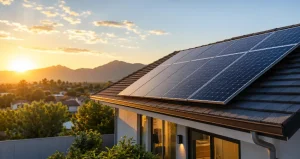
Buying a solar system in South Africa is no longer simply a matter of choosing a few panels and an inverter. Homeowners now have to compare system sizes, battery capacity, inverter specifications, installation standards, municipal requirements, warranties and several ways of financing the purchase. Two quotations that appear similar on the first page can therefore have very different long-term costs.
The biggest lesson I have learned when comparing solar proposals is that the cheapest quote is rarely the most useful starting point. A better approach is to first establish what your household actually needs and then ask several installers to quote against the same requirements. Once the equipment and installation scope are comparable, it becomes much easier to identify unnecessary extras, missing components and expensive finance.
This guide explains how South African homeowners can compare solar quotes and financing offers on a like-for-like basis, while avoiding common costs that are easy to overlook.
Work Out What You Need Before Asking for Solar Quotes
Start with your electricity usage rather than a salesperson’s recommended package. Collect several recent electricity bills and calculate your typical monthly consumption in kilowatt-hours (kWh). If you use prepaid electricity, review your purchase history where possible.
Next, decide what you expect solar to accomplish. A household mainly concerned about keeping Wi-Fi, lights, a television and refrigeration running needs a different system from a property trying to reduce most of its daytime grid consumption.
Also identify high-demand appliances such as electric geysers, ovens, pool pumps, air conditioners and borehole pumps. Running several of these simultaneously can substantially increase the inverter capacity required.
This preparation gives installers real information from which to design a system instead of starting with a generic package.
Get at Least Three Detailed Solar Quotes
Comparing several quotations is one of the simplest ways to understand the realistic price range for your property. However, asking three companies for “a solar system” is not enough. Give each installer the same electricity information and basic requirements.
Every quotation should clearly identify the number and wattage of solar panels, inverter brand and model, inverter capacity, usable battery capacity, mounting equipment, electrical protection, labour, monitoring equipment and warranty terms.
It should also state whether VAT, delivery, electrical work, compliance documentation and any applicable registration or engineering work are included.
This creates a like-for-like comparison. A R110,000 quotation is not necessarily cheaper than a R125,000 quotation if the first proposal excludes work that you will have to pay for later.
Compare Usable Battery Capacity, Not Just the Headline Number
Battery specifications deserve particular attention because batteries can represent a substantial part of the total system price.
Do not compare batteries solely by the large kWh figure printed in a proposal. Ask about usable capacity, recommended depth of discharge, expected cycle life, warranty conditions and whether the warranty has throughput limitations.
You should also consider whether you actually need the proposed capacity. Adding batteries can improve backup capability and allow stored solar electricity to be used after sunset, but excessive storage may significantly increase the purchase price without producing equivalent savings.
A useful quotation should therefore explain why the recommended battery capacity suits your household’s consumption pattern.
Check the Inverter and Solar Panel Specifications
Solar equipment should be compared by exact model rather than brand name alone. Manufacturers frequently sell multiple product ranges with different specifications and warranty conditions.
For the inverter, examine rated output, supported solar input, maximum PV capacity, battery compatibility, monitoring capabilities and warranty. Ask whether future expansion is practical if you expect your electricity requirements to increase.
For panels, compare wattage, efficiency, product warranty and performance warranty. Roof space also matters. Higher-output panels may be useful where usable roof area is limited, but the most expensive panel is not automatically the best financial choice.
Make Sure the Quote Includes Compliance Costs
Compliance should be considered before installation rather than treated as paperwork to solve afterwards. South African municipalities and electricity distributors can have specific requirements for Small-Scale Embedded Generation (SSEG), including approval, registration and commissioning procedures.
Requirements vary by supply authority. For example, municipal guidance in several areas requires documentation relating to the system design and inverter, followed by an electrical Certificate of Compliance and other commissioning documentation. Cape Town also has specific SSEG authorisation and sign-off requirements.
Before accepting a quotation, contact your municipality or electricity distributor and confirm the rules that apply to your property. If your electricity is supplied directly by Eskom, the applicable process may differ from that of a municipal customer.
Ask the installer in writing who handles the application, documentation, approved inverter requirements, Certificate of Compliance and final registration. A cheap quotation becomes less attractive when essential compliance work is excluded.
Do Not Assume There Is a Current Residential Solar Tax Rebate
Be careful when older South African articles or sales material mention the individual rooftop solar tax incentive. SARS states that this incentive applied to qualifying new and unused PV panels brought into use during the 2024 year of assessment, from 1 March 2023 to 29 February 2024. The credit was 25% of qualifying panel costs, limited to R15,000.
That means a homeowner purchasing a system now should not automatically deduct that historical incentive when calculating the affordability of a new installation. Base your decision on the rules and incentives that actually apply when you buy, and verify tax matters directly with SARS or an appropriately qualified adviser.
Compare Solar Finance Using Total Repayment
A low monthly instalment can make an expensive finance agreement look affordable. This is why monthly payment should never be the only number you compare.
Ask each finance provider for the financed amount, interest rate, whether the rate is fixed or variable, repayment period, initiation or administration charges where applicable, monthly fees, total interest and estimated total amount repayable.
For example, extending repayment from five years to ten years may reduce the monthly instalment substantially while increasing the amount of interest paid over the full term. The cheaper monthly option can therefore become the more expensive purchase overall.
Compare Solar Loans With Home Loan Based Finance
South African homeowners may encounter personal credit, dedicated solar finance and home-loan-linked funding. Each structure needs to be assessed on its own terms.
Some banks provide solar funding through existing home-loan facilities. For example, Absa currently describes solar and energy finance for qualifying existing home-loan customers through Further Advance or Re-Advance structures, with funding subject to its lending criteria and terms.
Using home-loan-linked funding may provide a competitive interest rate, but the repayment period matters enormously. Financing equipment over an unnecessarily long period can create substantial cumulative interest. Compare the total repayment under the proposed term and ask what happens if you make additional payments or settle early.
Separate the Solar Price From the Finance Price
One of the most effective comparison techniques is to request the cash installation price before discussing finance.
Suppose Installer A quotes R120,000 cash while Installer B presents only a monthly payment. Without knowing Installer B’s underlying cash price, you cannot determine whether the difference comes from equipment, installation margin, finance charges or all three.
First negotiate the system itself. Then compare methods of paying for exactly that system. Keeping those decisions separate makes pricing much more transparent.
Watch for Solar Quotes That Look Unusually Cheap
A quotation far below competing offers deserves additional investigation. It may be legitimate, but check what has been removed to achieve the lower figure.
Common differences include smaller batteries, lower-specification inverters, fewer panels, limited electrical work, excluded registration, shorter workmanship warranties and missing protection equipment.
Ask the installer to specify exclusions in writing. Also request the exact equipment model numbers before paying a deposit so that specifications can be independently checked.
Calculate Value From Your Electricity Profile
The financially sensible solar system is usually the one designed around when you consume electricity.
A household occupied during the day may consume solar generation directly, while a home that uses most electricity after work may depend more heavily on battery storage. Changing when appliances operate can sometimes improve solar utilisation without buying additional hardware.
Consider scheduling geysers, pool pumps, washing machines and dishwashers during strong solar-production periods where practical. Good energy management can improve the value of the installed system and may reduce the amount of battery storage required.
Questions and Answers About Solar Quotes and Finance in South Africa
1. How many solar quotes should I get?
Three detailed quotations are a sensible minimum. More quotations can help for an expensive or complicated installation, but quality matters more than collecting a large number of generic prices. Give each installer the same requirements so the proposals can be compared properly.
2. Should I choose the cheapest solar installer?
Not automatically. Compare equipment specifications, installation scope, compliance work, warranties and after-sales support. A slightly higher initial price may offer better overall value if important work and stronger equipment are included.
3. What should be included in a South African solar quote?
A detailed quote should identify panels, inverter, batteries, mounting hardware, electrical protection, labour, monitoring and warranties. It should also clearly state VAT and whether compliance, registration, commissioning or other required professional work is included.
4. Is a bigger battery always better?
No. Additional storage can provide longer backup and more evening energy, but it also increases system cost. Battery capacity should be based on your essential loads, nighttime consumption, desired backup duration and available solar generation.
5. How do I know what inverter size I need?
Inverter sizing depends largely on the loads you want to operate simultaneously, as well as the planned PV array and battery configuration. An installer should perform a load assessment rather than selecting capacity simply from the size of your house.
6. Is solar finance better than paying cash?
That depends on your financial circumstances. Cash avoids financing costs, while finance allows you to preserve available capital and spread the expense. Compare the total repayment and fees rather than deciding solely from the monthly instalment.
7. Can I finance solar through my home loan?
Some South African banks offer home-loan-linked options for qualifying customers. Availability, rates and conditions vary. When comparing this approach, pay particular attention to the repayment period because extending solar expenditure across many years can materially increase total interest.
8. Do I need a Certificate of Compliance for solar?
Electrical compliance is an important part of a properly completed installation. Municipal guidance for SSEG installations commonly requires an electrical Certificate of Compliance as part of the process, although exact registration and commissioning requirements differ by supply authority.
9. Should I buy equipment before municipal approval?
Check your local requirements first. Some municipalities specifically instruct property owners to obtain approval before installation. Mossel Bay, for example, advises that equipment should not be purchased before written municipal approval because an application is not guaranteed to be approved.
10. What is the best way to avoid overpaying for solar?
Start with your actual electricity consumption, define your backup requirements, obtain comparable itemised quotations and verify exact equipment models. Then compare cash pricing separately from financing and calculate the total repayment. Finally, confirm local compliance requirements before committing money to the installation.
Conclusion
Getting a good solar deal in South Africa is less about finding the lowest advertised price and more about making every supplier quote for the same outcome. Understand your electricity consumption first, compare exact equipment and usable battery capacity, include compliance costs, and investigate unusually cheap offers carefully.
Apply the same discipline to finance. Establish the real cash price, compare interest and fees, calculate the total amount repayable and avoid extending the term simply to create an attractive monthly instalment. When system design, compliance and finance are evaluated separately, it becomes much easier to identify a solar installation that provides genuine long-term value without paying for capacity or financing you do not need.